

Competitive gaming evolves fast, and if you’re here, you’re likely looking to understand the esports major turning points that have reshaped the scene. From dramatic roster changes and meta-defining patches to unforgettable championship moments, these shifts don’t just change a single tournament—they redefine entire titles, teams, and player legacies.
This article breaks down the most impactful esports major turning points across leading competitive titles, explaining why they mattered and how they continue to influence today’s strategies, tournament outcomes, and player development. Whether you’re a dedicated fan, an aspiring competitor, or someone looking to sharpen your competitive edge, understanding these milestones gives you context that highlights patterns others might miss.
Our analysis draws on in-depth match reviews, tournament data, patch history comparisons, and strategic breakdowns from high-level competitive play. The goal is simple: give you a clear, insight-driven look at the moments that didn’t just make headlines—but permanently shifted the competitive landscape.
The Arcade Era: High Scores and Local Legends (1972–1990)
Before million-dollar prize pools, there was a dorm room at Stanford. In 1972, the “Intergalactic Spacewar Olympics” quietly introduced the radical idea that video games could crown champions. No sponsors. No livestreams. Just bragging rights (which, in competitive spaces, are currency).
Then came the shift from campus novelty to cultural phenomenon. The 1980 Atari Space Invaders Championship drew over 10,000 players across the U.S., marking one of the first esports major turning points. Critics argue it was just marketing—and yes, Atari wanted headlines. But scale matters. Corporate backing legitimized competition and proved gaming could gather crowds.
Meanwhile, arcades became battlegrounds. Pac-Man and Donkey Kong turned leaderboards into public scoreboards of honor. Players like Billy Mitchell became local legends because everyone could see their dominance.
Unlike today’s team-based metas, mastery meant pattern recognition and flawless execution. Limited hardware forced precision over strategy depth. (Pro tip: Classic arcade patterns are still studied for reaction training.)
This era’s true competitive advantage? Visibility. If your initials were on top, everyone knew.
The LAN Revolution: The Birth of Modern Esports (1990s)
Before Twitch streams and packed arenas, competition meant hauling a bulky CRT monitor into a friend’s basement. The rise of PC gaming and Local Area Networks (LANs)—private networks connecting computers in one physical space—changed everything. For the first time, players could compete in real time with near-zero latency (delay between input and on-screen action). That technical leap didn’t just improve gameplay; it created true digital sport.
Pivotal Games That Lit the Fuse
When Doom (1993) introduced deathmatch mode, it transformed single-player shooters into social battlegrounds. Then came Quake (1996), refining 3D movement and precision aiming into something fiercely competitive. Unlike many retrospectives that focus only on popularity, what’s often missed is how Quake’s network code set the standard for smooth multiplayer architecture.
The defining spectacle? John Carmack awarding his Ferrari to Dennis “Thresh” Fong at the 1997 Red Annihilation tournament. It wasn’t just flashy—it signaled that gaming skill had tangible, high-value rewards. Moments like this stand among esports major turning points.
The First Structured League
Founded in 1997, the Cyberathlete Professional League (CPL) formalized chaos into competition. It introduced:
- Standardized rulesets
- Cash prize pools
- Anti-cheat enforcement
This structure legitimized players as professionals rather than hobbyists (a subtle but massive shift).
The Birth of Setup Optimization
LAN events exposed a harsh truth: hardware mattered. Players began prioritizing:
- Low-latency CRT monitors
- Custom mice with adjustable DPI (dots per inch sensitivity)
- Personalized config files for movement and aim precision
Pro tip: Even then, shaving milliseconds off response time separated champions from contenders. Competitive advantage wasn’t just skill—it was preparation.
Going Global: The Rise of Korea and Online Matchmaking (2000s)
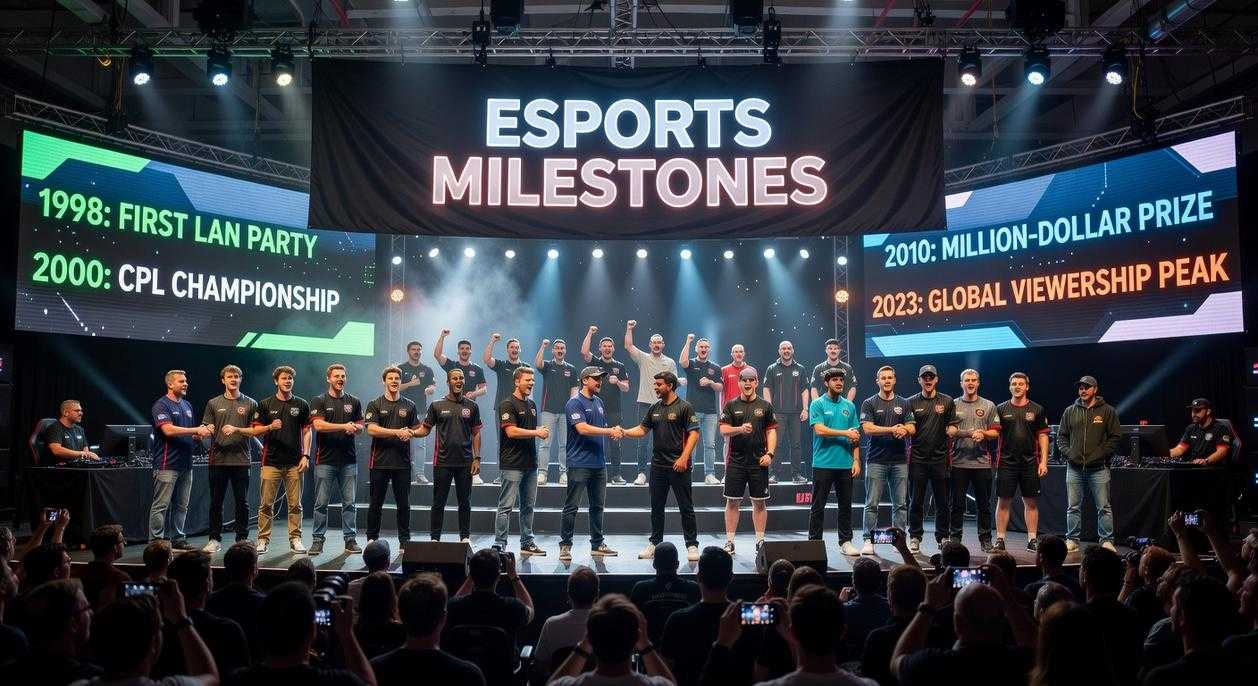
The early 2000s marked one of the true esports major turning points. On one side, South Korea transformed competitive gaming into a national spectacle. On the other, North America built a commercial circuit around console rivalries. Same decade—very different blueprints.
The StarCraft Phenomenon vs. MLG’s Console Revolution
First, consider StarCraft: Brood War (1998). In South Korea, it wasn’t just popular—it became infrastructure. Televised leagues like OGN turned matches into primetime events. Pro players earned salaries, lived in team houses (shared training facilities where teams practiced full-time), and drilled strategies daily. Mechanical skill mattered, but so did preparation and coaching.
Meanwhile, Major League Gaming (MLG), founded in 2002, pushed a different model in North America. Instead of PC café culture, MLG focused on console titles like Halo. Think arena stages, grassroots qualifiers, and a structured pro circuit. Korea emphasized team-based training ecosystems; MLG spotlighted individual stars battling live on broadcast. Both worked—but for different audiences.
Then came broadband. As high-speed internet access expanded globally in the 2000s (OECD reports show steady penetration growth across developed nations), tournaments shifted from local LAN events to online ladders. A player in Seoul could scrim against someone in Los Angeles without booking a flight. Accessibility exploded.
However, some argue online play diluted competition because latency (network delay) affects performance. Fair point. Yet online ecosystems also accelerated the rise of the “meta”—the evolving set of dominant strategies shaped by patches and player innovation. Winning now required analysis, adaptation, and scouting, not just fast reflexes.
For deeper breakdowns of elite competitors, see player performance analysis who dominated the tournament stage.
The Million-Dollar Era: Crowdfunding and Mainstream Spectacles (2010s-Present)
2011 changed everything. Valve’s first Dota 2 tournament, The International, launched with a jaw-dropping $1 million prize pool—unheard of at the time. Then came the Compendium (later called the Battle Pass), a crowdfunding tool where players bought in-game perks to boost the prize pool. Traditional funding vs. community crowdfunding became the new A vs. B debate. Traditional meant fixed budgets and publisher limits. Crowdfunding meant fans directly scaling rewards (and feeling invested—literally). By 2021, The International prize pool surpassed $40 million (Valve data), redefining esports major turning points.
At the same time, Twitch (founded 2011) made watching esports frictionless. Cable TV vs. Twitch? TV required scheduling and regional access. Twitch offered instant, global, interactive viewing. Live chat, subscriptions, and ads created fresh revenue streams for players and orgs (Amazon acquired Twitch for $970 million in 2014, per SEC filings).
Franchised leagues pushed another comparison: open circuits vs. geolocated franchises. The LCS and Overwatch League mirrored the NBA model—city-based teams, buy-ins, revenue sharing.
Modern competition also shifted from raw talent to structured preparation:
- Coaches refining drafts
- Analysts dissecting opponents
- Data teams optimizing strategy
Mechanical skill alone vs. full-stack infrastructure? Today, infrastructure wins.
Stay Ahead of the Next Competitive Shift
You came here to understand the latest Horizon headlines, sharpen your gaming strategies, and break down the esports major turning points shaping today’s competitive scene. Now you have a clearer view of what’s changing, why it matters, and how it impacts your gameplay.
In competitive gaming, falling behind by even one patch, one strategy shift, or one tournament meta can cost you wins. Staying informed isn’t just helpful — it’s the difference between climbing the ranks and getting left behind.
The next step is simple: keep tracking tournament breakdowns, refine your setup, and apply these insights before your next match. Don’t wait until the meta shifts again.
If you’re serious about improving, dive into our latest competitive analyses and strategy updates now. Thousands of competitive players rely on our breakdowns to stay ahead — and you can too. Check the newest insights, optimize your play, and gain the edge before your opponents do.
 Kylor Xevandor