
Competitive gaming evolves fast, and staying ahead means understanding more than just patch notes and highlight reels. If you’re searching for deeper insights into Horizon headlines, advanced strategies, esports tournament breakdowns, and performance-boosting setup tips, this article is built for you. We break down what’s happening across the competitive scene, analyze key matchups, and explore how regional esports playstyles shape tournament outcomes and meta shifts.
Many players struggle to translate pro-level gameplay into practical improvements. That’s why we focus on clear strategy explanations, tactical adjustments you can apply immediately, and data-backed observations from recent tournaments. Our analysis draws from competitive match reviews, evolving meta trends, and proven optimization techniques used at high levels of play.
Whether you’re aiming to climb ranked ladders, refine your mechanics, or better understand the global esports landscape, this guide delivers actionable insights designed to sharpen your edge and keep you competitive.
Every competitive scene has a meta, and yes, guides scream at you to copy it. That’s exhausting. You grind ranked, mirror a pro draft, and still get stomped. Why? Because context gets ignored.
Meanwhile, the best teams adapt regional esports playstyles to their own culture. Korean squads prize macro discipline and vision control; North American teams often gamble on high-variance skirmishes; European lineups flex creative drafts. Those differences aren’t cosmetic—they’re philosophy.
So instead of copying builds like it’s a speedrun glitch, ask what problem the strategy solves. Otherwise, you’re cosplaying greatness, not understanding it (and that never wins championships ever).
The Korean Playbook: Unbreakable Discipline and Macro Supremacy
The Korean approach to competitive gaming is built on a simple premise: minimize mistakes, maximize certainty. While other regional esports playstyles often celebrate explosive mechanics or chaotic skirmishes, Korean teams historically prioritize repeatable systems that squeeze opponents out of the game.
At its core, this philosophy revolves around three pillars:
- Tempo control — dictating the pace so the enemy reacts instead of initiates.
- Vision warfare — denying information while maintaining total map clarity.
- Disciplined objective trading — taking guaranteed value instead of coin-flip fights.
Tactical Precision Over Flash
Tempo control means understanding when to slow the map to suffocate resources and when to accelerate around a guaranteed numbers advantage. In League of Legends, this often looks like synchronized wave management before touching Dragon—no rushed calls, no ego engages.
Vision warfare is less about placing wards and more about creating informational asymmetry. If your opponent doesn’t know where you are, every move costs them hesitation (and hesitation loses games).
Consider a classic StarCraft scenario: instead of rushing a risky early attack, a Korean-style Terran secures expansions, scans methodically, denies scouting, and advances with maxed-out efficiency. The opponent isn’t defeated in one dramatic fight—they’re slowly starved.
Critics argue this style is “too safe” or predictable. But predictability with superior execution becomes inevitability. Consistency outperforms volatility across long tournaments.
Player takeaway: focus on clean fundamentals before highlight plays. Track cooldowns. Track vision gaps. Identify your win condition and reinforce it every minute. (Flashy outplays are great for montages, not always for match wins.)
Pro tip: Review losses specifically for unforced errors, not missed hero moments.
European Innovation: Creative Compositions and Meta Disruption
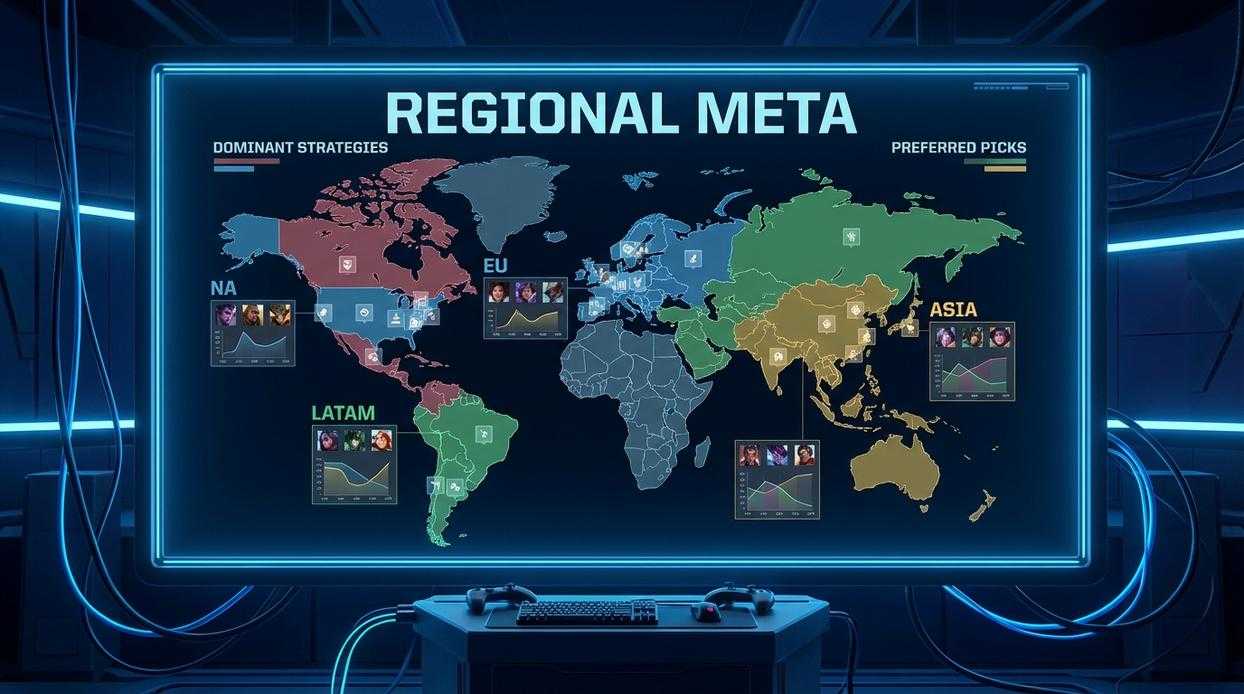
Europe has long built its esports identity on strategic flexibility—a willingness to bend, break, and occasionally ignore the established meta. In competitive terms, the meta (most effective tactics available) defines what’s statistically strongest at a given time. But European teams often treat it as a suggestion, not a rulebook.
Back in 2019, OG’s Dota 2 championship run redefined creative drafting. After months of scrim experimentation, they unveiled Io as a position-one core—an unconventional move that stunned opponents expecting standard carries. The result? A tempo swing that dismantled disciplined lineups built for predictable late-game scaling. Analysts called it risky. It was. But it worked because of preparation and trust.
This is where the art of the flex pick shines. A flex pick is a hero or agent that can fill multiple roles, obscuring draft intentions and forcing reactive bans. European squads thrive here, often:
- Drafting ambiguous early picks to hide lane assignments
- Adapting mid-game rotations after 15 minutes when vision control shifts
- Prioritizing synergy over raw tier-list power
Critics argue that innovation for innovation’s sake backfires. And they’re right—forced creativity without structure collapses against disciplined macro. Yet Europe’s success shows calculated deviation can outperform rigid adherence to tier lists (just ask teams eliminated by “off-meta” drafts).
Understanding regional esports playstyles helps contextualize this contrast.
If you’re climbing ranked, take a page from these innovators. Test counters. Rethink standard builds. Review how strategies evolve over time, much like this breakdown of meta evolution throughout a full tournament run.
Pro tip: Experiment in scrims or unranked first—creativity thrives best when pressure is controlled. (No one wants to be that teammate testing theory in finals.)
North American Aggression: High-Confidence Plays and Early-Game Dominance
North American teams often embrace a simple philosophy: hit first, hit hard, and never let go. In contrast to slower macro-heavy approaches, this style prioritizes mechanical skill, fast tempo, and early pressure. The goal? Build a lead so quickly that opponents never stabilize (think of it as winning the opening act before the main show even starts).
Tactical Breakdown: Fast vs Patient
At its core, this strategy revolves around lane dominance—gaining early control of key areas or matchups through superior mechanics and pressure. Add in early-game ganking (surprise attacks on vulnerable opponents) and proactive roaming, and you create constant skirmish opportunities.
Meanwhile, the classic Korean approach favors vision control, scaling, and measured team fights. One bets on explosive momentum; the other trusts disciplined execution.
| NA Aggression | Korean Patience |
|—————|—————–|
| Early skirmishes | Late-game scaling |
| Risk-heavy dives | Vision-first setups |
| Star-player carry focus | Team-wide coordination |
| Snowball tempo | Minimized mistakes |
Critics argue this high-risk style throws games unnecessarily. And yes, overforcing fights can backfire (we’ve all seen the 5v3 dive go wrong). However, when executed cleanly, early leads statistically increase win probability in multiple esports titles (League of Legends World Championship data consistently shows teams ahead at 15 minutes win over 70% of games, per Riot Games stats).
The “Hero Play” Factor
Culturally, North America celebrates the clutch outplay—the solo push, the 1v2 turn. These moments define regional esports playstyles and often shift momentum instantly. The downside? Sometimes coordination suffers when everyone wants to be the highlight clip.
In-Game Example
In Call of Duty, an NA-style squad might aggressively contest the first Hardpoint with tight spacing and synchronized utility. Rather than waiting for rotation, they stack the objective, overwhelm spawns, and lock down angles immediately. Similarly, in Apex Legends, an early third-party push onto weakened squads secures loot control and map dominance from minute three onward.
Player Takeaway
So how do you apply this? First, identify timing windows—enemy reloads, cooldown gaps, or poor positioning. Then commit decisively. Calculated aggression means weighing risk versus reward before pulling the trigger. Pro tip: communicate your intent clearly; hesitation kills momentum faster than bad aim. When you control tempo, you control the game.
Top-tier competition is shaped by Korean discipline
European innovation, and North American aggression. These labels describe practice habits, experimental tactics, and high-risk tempo plays. Simply copying a pro’s keybinds misses the underlying system—the coordinated decision-making framework guiding every rotation and fight. Think of it like learning jazz: memorizing notes is not mastering improvisation. Review your last five matches and tag each round as patient, creative, or aggressive. Patterns reveal your default style. Pro tip: lean into your natural bias before patching weaknesses.
- Build drills, scrims, and VOD reviews around your identity.
- Track results weekly for steadier improvement gains.
Dominate the Horizon Competitive Scene
You came here to understand what’s really shaping Horizon’s competitive meta—from evolving strategies to the impact of regional esports playstyles on tournament outcomes. Now you have the clarity to read the battlefield smarter, adapt faster, and stay one step ahead of your opponents.
The biggest frustration for competitive players isn’t lack of skill—it’s falling behind the meta, misreading opponents, or missing the subtle shifts that decide high-stakes matches. In a scene where strategies evolve weekly, outdated knowledge costs wins.
Your next move is simple: start applying these insights in your scrims, refine your setup for peak performance, and study how different regions approach pressure, pacing, and team coordination. Small adjustments now can translate into major competitive gains.
If you’re serious about climbing ranks and outperforming the competition, stay locked in with the #1 source for Horizon headlines, tournament breakdowns, and pro-level strategy insights. Don’t get left behind—level up your game today and put these tactics into action.
 Lynnesa Rosselinda is a creative force in the gaming content space, known for her ability to translate complex gameplay mechanics into engaging, easy-to-follow insights. With a passion for storytelling and player-focused experiences, she contributes thoughtful perspectives on emerging trends, player strategies, and the evolving culture of competitive gaming.