
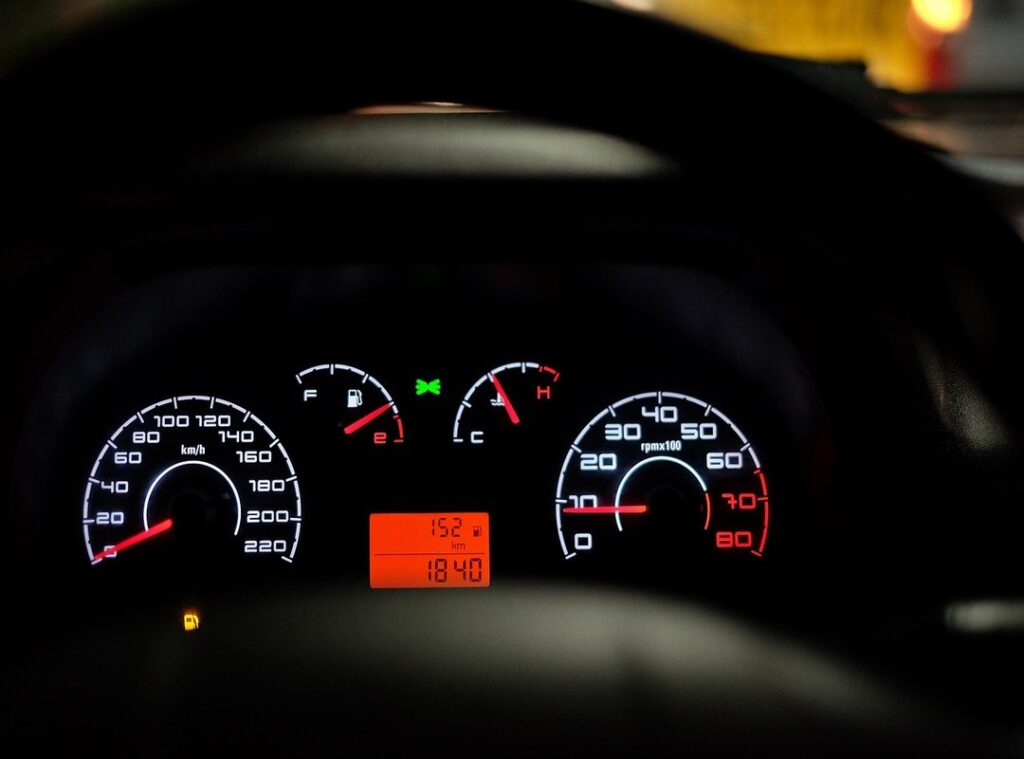
Converting 133 mph to km/h can be a bit tricky, but it’s not rocket science. You might need to do this when traveling or just out of curiosity. I’ll show you how to do it in a way that’s simple and straightforward.
Trust me, by the end, you’ll have it down pat. Let’s get started.
Understanding Units of Speed
Miles per hour, or mph, is a unit of speed commonly used in the United States. It measures how many miles a vehicle can travel in one hour.
Kilometers per hour, or km/h, is the standard unit of speed in most other countries. It tells you how many kilometers a vehicle can cover in an hour.
Knowing how to convert between these units is crucial, especially if you’re traveling. Imagine driving in Europe and seeing a speed limit sign in km/h when you’re used to mph.
It’s not just about avoiding speeding tickets. It’s also about understanding local traffic and staying safe on the road. For example, 133mph to kmh is about 214 km/h.
That’s a big difference, and it can make or break your trip.
The Conversion Formula
Let’s get straight to it. The basic formula for converting miles per hour (mph) to kilometers per hour (km/h) is simple: 1 mph = 1.60934 km/h.
Why 1.60934? It’s the exact conversion factor because 1 mile is approximately 1.60934 kilometers. This number ensures accuracy when you switch between the two units.
Now, let’s break it down with an example. Say you have 10 mph. To convert it to km/h, you multiply 10 by 1.60934.
10 mph * 1.60934 = 16.0934 km/h
See, and easy as that. You can use this same method for any speed.
For instance, if you need to convert 133mph to kmh, just multiply 133 by 1.60934.
133 mph * 1.60934 = 214.04222 km/h
There you go, and no fuss, no complicated steps. Just a straightforward way to get the job done.
Step-by-Step Conversion of 133 mph to km/h
Converting 133 mph to km/h is straightforward, and here’s how you do it:
- Write down the given speed (133 mph).
- Multiply 133 by the conversion factor (1.60934).
Let’s break it down:
- Perform the multiplication (133 * 1.60934).
Now, let’s do the math.
- Round the result to a reasonable number of decimal places (if necessary).
The final step:
- Present the final converted speed in km/h (214.04 km/h).
There you have it, and simple and practical.
Common Scenarios for Conversion
Traveling between countries can be a headache, especially when you’re trying to figure out speed limits. Imagine driving in Europe and seeing a sign that says 130 km/h. If you’re used to miles per hour, you might feel lost.
Quick conversions are a must.
In sports, auto racing is a big one. Fans and participants often need to compare speeds from different regions. For example, if a race in the U.S. shows speeds in mph and another in Europe uses km/h, you need to know how they stack up.
It’s not just about bragging rights; it’s about understanding performance.
Engineering documents and specs can also get tricky. Engineers and technicians need precise conversions to ensure everything lines up. A small mistake can lead to big problems.
Accuracy is key here.
One common conversion I see a lot is 133mph to kmh. It’s a specific number, but it comes up in various contexts, from car manuals to sports stats. Knowing this conversion can save you a lot of trouble. Lcfgamenews
Frequently Asked Questions (FAQs)

Q1: Why is the conversion factor 1.60934?
Some people might wonder why we use such a specific number. The conversion factor of 1.60934 is based on the international agreement that defines the relationship between kilometers and miles. It’s precise to ensure accuracy in conversions.
Q2: Can I use an online converter for this?
Absolutely, online converters are a quick and easy way to get the job done. Just make sure the site you’re using is reliable. Some folks might argue that doing it manually is more accurate, but let’s be real, who has time for that?
Q3: What if I need to convert km/h to mph?
If you need to go from kilometers per hour to miles per hour, just divide by 1.60934. Simple as that. 133mph to kmh would be 133 * 1.60934, which equals about 214.04 km/h.
Q4: Are there any apps that can help with this conversion?
Yes, there are plenty of apps out there. They can be handy, especially if you do these conversions often. But some people might say relying on apps makes you lazy.
I say, if it saves time and reduces errors, why not?
Q5: How accurate is the conversion?
The conversion is as accurate as the numbers you put in. If you use 1.60934, you’ll get a very accurate result. Some might argue that rounding to 1.61 is good enough.
Sure, it’s close, but why settle for less when you can have the exact figure?
Additional Examples and Practice Problems
Let’s dive into some examples to make this conversion clear.
First, a quick refresher: 1 mile per hour (mph) is equal to 1.60934 kilometers per hour (km/h). Simple, right?
Example 1: Convert 50 mph to km/h, and to do this, multiply 50 by 1.60934. So, 50 mph equals 80.467 km/h.
Example 2: Convert 70 mph to km/h, and same process. Multiply 70 by 1.60934.
This gives you 112.654 km/h.
Now, let’s try a faster speed.
Practice Problem: Try converting 100 mph to km/h on your own. Go ahead, give it a shot, and it’s all about the multiplication.
Once you’ve done that, check your answer, and it should be 160.934 km/h.
For a real-world example, think about a car going 133mph. How fast is that in km/h, and just multiply 133 by 1.60934.
You get 214.042 km/h, and that’s pretty fast!
These examples should help you get a good grip on the conversion. Keep practicing, and soon it’ll be second nature.
Mastering Speed Conversions
Recapping the key points, converting 133mph to kmh involves understanding that 1 mile per hour equals approximately 1.60934 kilometers per hour. This conversion is essential for anyone dealing with international speed limits or comparing vehicle speeds across different regions.
Understanding the conversion process is crucial for a variety of applications, from travel to scientific research. It ensures accuracy and consistency in data interpretation.
Practice more conversions to become more comfortable with the process. Regular practice will make these calculations second nature, enhancing your ability to quickly and accurately convert speeds as needed.
 Joshua Grantoveda brings a sharp analytical mindset to the world of esports and gaming performance. Specializing in competitive breakdowns and strategic optimization, he focuses on helping players understand the deeper layers of gameplay, from decision-making patterns to setup efficiency, making him a valuable voice for gamers aiming to elevate their skills.